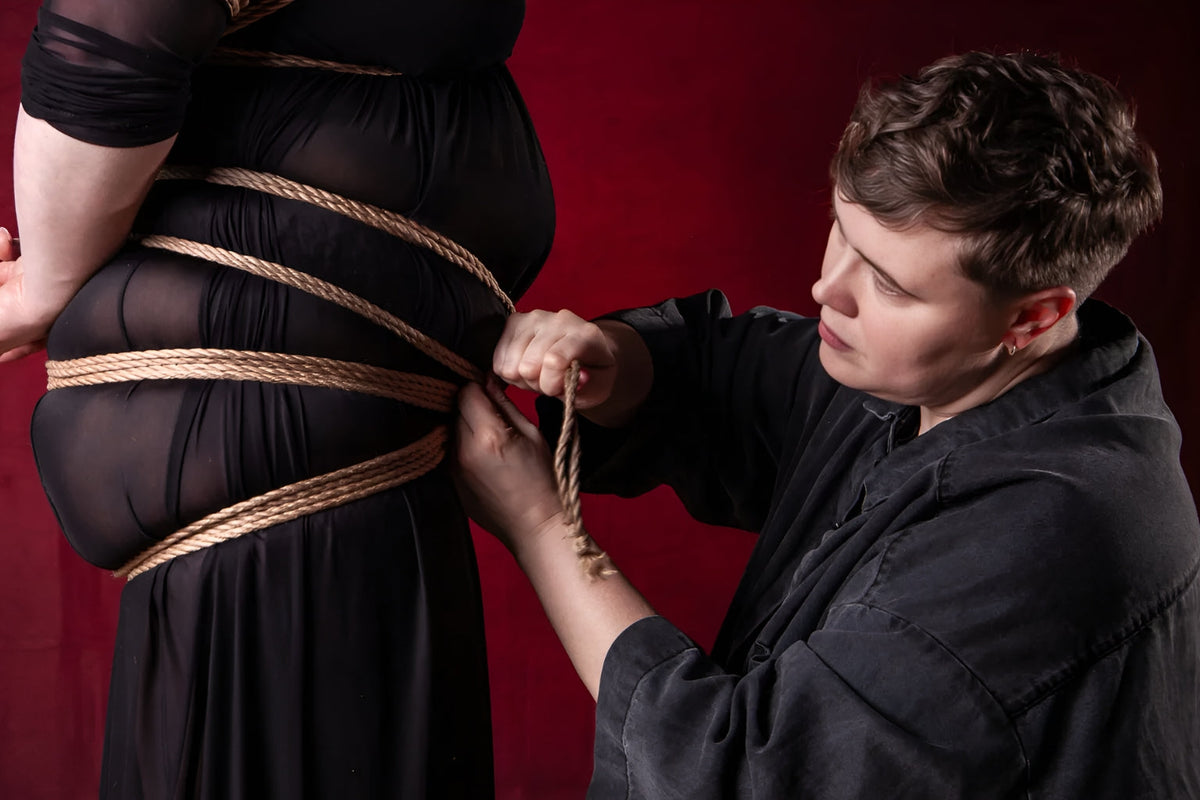
Rope bondage for plus-size bodies works beautifully when ties are adapted to the body instead of forcing the body to fit the tie. That usually means using longer or extra lengths of rope, choosing wider rope and more wraps to spread pressure, anchoring ties on stable areas rather than soft tissue that shifts, checking skin folds so rope does not dig in, choosing supported positions that keep breathing easy, and doing extra circulation and nerve checks. Every body can enjoy rope safely.
Most rope bondage tutorials are demonstrated on one kind of body. Diagrams assume a certain chest, waist and hip shape, and instructions assume rope will sit exactly where the photo shows. When it does not, many plus-size people conclude rope is “not for them.”
That is simply not true. Rope is about connection, sensation, trust and creativity, and it can be adapted to any body. This guide offers practical, body-specific advice. You will learn:
- Why standard ties do not always work
- How to adjust tension and placement
- Positions that are more comfortable
- Rope material considerations
- Safety checks specific to body type
For a broader introduction to rope gear and safety, see our guide to the best sex toys for rope bondage.
Why Standard Ties Don’t Always Work
Standard ties are not wrong; they are simply designed around average proportions. Here is where they can fall short, and why the fix is adaptation, not exclusion.
Common Challenges
| Challenge | Why it happens | The fix |
|---|---|---|
| Running out of rope | Patterns assume a certain circumference | Use longer rope or add extensions |
| Rope slides out of place | Soft tissue shifts under tension | Anchor on stable areas, add friction points |
| Rope digs into skin folds | Rope sinks into creases | Place rope above or below folds, check often |
| Breathing feels restricted | Chest and belly ties compress the torso | Keep torso ties looser, avoid stacking wraps |
| Joints strain in certain positions | Arms or legs reach different angles | Adapt positions to your range of motion |
| Uneven pressure | Single strands concentrate force | Use more wraps and wider rope |
Bodies Are Different, Not Wrong
Every body has different proportions. A tall, slim person, a muscular person, a person with large breasts and a person with a large belly all need adjustments. Plus-size bodies simply highlight that rope must follow anatomy, not the other way around.
Common Ties That Need Adapting
- Chest harnesses: may need longer rope and careful placement above and below the bust.
- Hip and waist harnesses: may need anchoring on the hip bones rather than the soft waist.
- Arms-behind-the-back ties: can strain shoulders depending on body shape and flexibility.
- Frog ties (folded leg ties): may be uncomfortable depending on thigh and calf shape and knee flexibility.
Communication First
Before any tie, talk about:
- Areas that feel sensitive or self-conscious
- Joint, shoulder, hip or knee issues
- Breathing or circulation concerns
- How each person wants to talk about bodies during play
A respectful, body-positive approach makes rope feel safe emotionally as well as physically.
Adjusting Tension and Placement
Tension and placement are the two most important adjustments. Get these right and most ties become comfortable.

Placement: Anchor on Stable Areas
Rope stays put best where there is firm structure underneath.
| Body area | Placement tip |
|---|---|
| Chest | Place bands above and below the bust, where the ribcage provides structure |
| Waist | Anchor near the narrowest point or on the hip bones, not the softest part of the belly |
| Hips | Use the hip bones as anchor points |
| Thighs | Place wraps where they will not roll, often closer to the knee or hip |
| Arms | Keep wraps on the forearm or mid-upper arm, avoiding the inner elbow and armpit |
| Wrists and ankles | Use multiple wraps for a wide, stable cuff |
Skin Folds: Avoid Burying Rope
When rope sinks into a skin fold, it can pinch, rub or hide pressure you cannot see. To avoid this:
- Place rope slightly above or below creases.
- Smooth skin before tightening.
- Check folds with your fingers after each step.
- Re-adjust if rope disappears into a crease.
Tension: Snug, Not Tight
| Tension rule | How to check |
|---|---|
| Two-finger rule | You should be able to slide two fingers under any wrap |
| No sinking | Rope should rest on the skin, not cut deeply into it |
| Even pressure | Multiple wraps should share the load |
| Breathing check | The person should be able to take a full, deep breath |
Use More Wraps
Single strands concentrate pressure. Two to four wraps side by side create a wider band that spreads force more evenly and feels more comfortable.
Add Friction Points
On soft tissue, rope can slide. Friction points, such as half hitches or crossing ropes, help hold bands in place without needing extra tension.
Lengthen Your Rope
Many rope sets come in lengths around 26 to 30 feet. Larger bodies may need:
- Extra lengths
- Extensions joined with a secure knot
- Longer single pieces
Plan your rope before the scene so you do not run short mid-tie.
Positions That Are More Comfortable
Comfortable positions make rope enjoyable and safer. For plus-size bodies, supported positions that protect joints and breathing are often best.

Recommended Positions
| Position | Why it works |
|---|---|
| Seated on a sturdy chair | Supports weight, keeps breathing open |
| Reclined with pillows | Comfortable for longer scenes |
| Side-lying | Takes pressure off the chest and belly |
| Seated on the bed with back support | Stable and relaxing |
| Kneeling on a cushion, briefly | Works for short ties if knees are comfortable |
| Standing, briefly | Only with support nearby, and only for short periods |
Positions to Approach Carefully
| Position | Risk | Adjustment |
|---|---|---|
| Lying face-down | Can restrict breathing | Keep it brief, use pillows under hips and chest |
| Hogtie (wrists to ankles behind) | Strains shoulders, knees and breathing | Use loose connections or skip |
| Arms tied high behind the back | Shoulder strain, nerve risk | Keep arms lower, forearms parallel |
| Deep frog ties | Knee and hip strain | Use loose ties, check comfort often |
| Suspension | High load on body and nerves | Only with experienced riggers and proper equipment |
Breathing Comes First
Torso ties compress the chest and belly. Always:
- Ask the person to take a deep breath after each wrap.
- Avoid stacking chest and belly ties too tightly.
- Loosen immediately if breathing feels shallow.
Use Furniture and Props
- Chairs with sturdy legs offer tie points and support.
- Pillows and wedges reduce strain on joints.
- Bed frames make easy anchor points for light restraint.
Alternatives to Complex Ties
If rope feels uncomfortable, try:
- Padded cuffs, like those in our Leather Bondage Set, which spread pressure over a wide band
- Blindfolds for sensory play
- Simple decorative ties that do not bear load
Browse more options in our bondage gear collection.
Rope Material Considerations
Rope material and thickness make a big difference in comfort, grip and safety.

Rope Material Comparison
| Material | Feel | Grip | Stretch | Care | Best for |
|---|---|---|---|---|---|
| Cotton | Soft | Moderate | Some stretch | Machine washable | Beginners, comfort |
| Jute | Rough, natural | High | Low | Needs conditioning, hard to wash | Experienced riggers |
| Hemp | Firm, natural | High | Low | Needs conditioning | Durable ties |
| Bamboo | Silky | Moderate | Low | Gentle washing | Soft feel |
| Synthetic (MFP, nylon) | Smooth | Low, can slip | Varies | Washable | Colorful, easy care |
Why Grip Matters on Soft Tissue
Ropes with more grip, like jute and hemp, stay in place better on areas where soft tissue shifts. Slippery synthetic rope can slide and loosen, or tighten unexpectedly. Cotton offers a comfortable middle ground for beginners.
Thickness Matters
| Thickness | Feel | Best use |
|---|---|---|
| About 6 mm | Thinner, more precise | Detailed ties, experienced use |
| About 8 mm | Wider, more comfortable | Spreading pressure, beginners |
For plus-size bodies, slightly thicker rope or more wraps usually feel more comfortable, because pressure is spread over a wider area.
Rope Burn and Chafing
- Avoid pulling rope quickly across skin.
- Keep skin dry, since sweat increases friction.
- Use smoother rope where skin is sensitive.
Rope Care
- Wash cotton and synthetic rope according to the maker’s instructions.
- Never share natural fiber rope between partners without careful cleaning, since it can be hard to fully sanitize.
- Inspect rope for fraying before every use.
Safety Checks Specific to Body Type
All rope bondage requires safety checks. Plus-size bodies benefit from a few extra ones.
Before the Scene
- Discuss health factors: joint issues, breathing conditions, diabetes, blood pressure or circulation concerns.
- Keep safety shears nearby. EMT-style shears can cut rope quickly.
- Plan rope lengths so you do not run short.
- Choose supported positions.
During the Scene
| Check | What to look for |
|---|---|
| Circulation | Coldness, color change, swelling in hands or feet |
| Nerve | Numbness, tingling, pins and needles, weakness |
| Breathing | Shallow breaths, difficulty taking a deep breath |
| Skin folds | Rope sinking into creases, pinching |
| Joint comfort | Ache in shoulders, hips or knees |
| Overheating | Sweating, flushed skin, feeling faint |
Check in every few minutes, and ask the person to squeeze your fingers and wiggle theirs.
Watch for Nerve Pressure
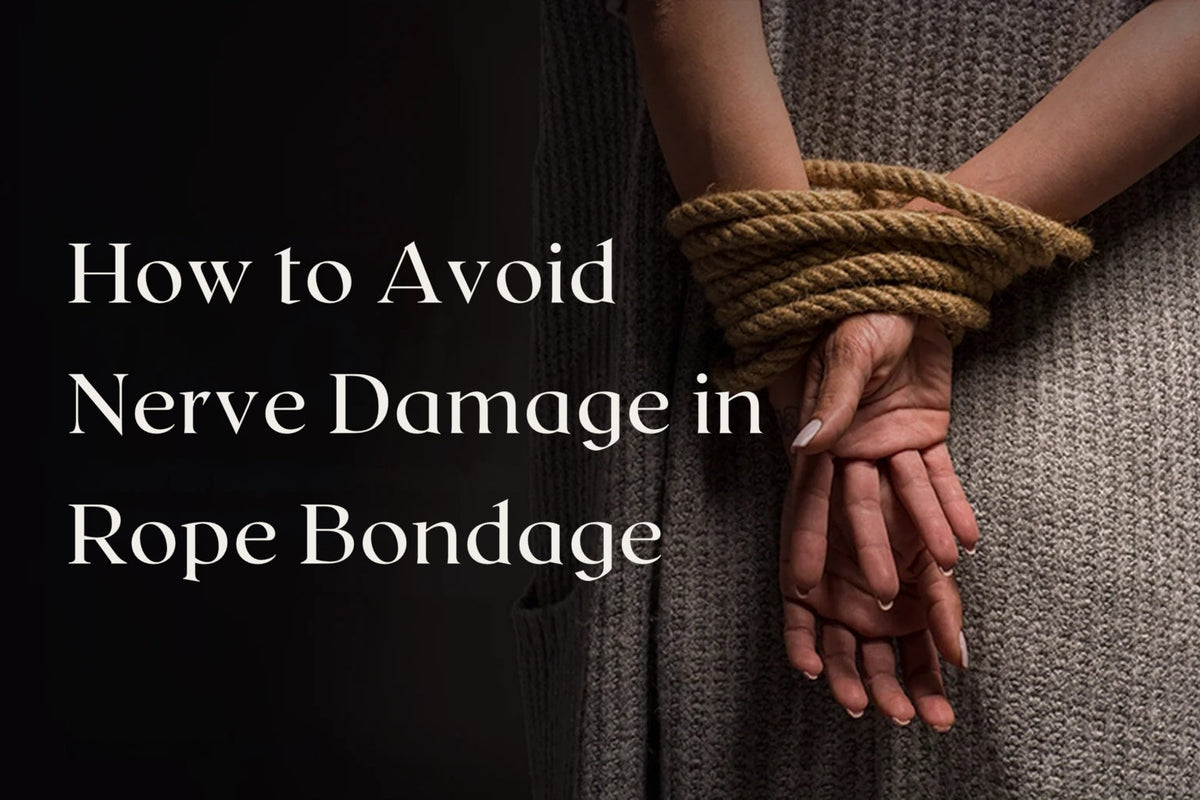
Nerve damage is the most serious rope risk, and it can happen with any body. Learn the warning signs and high-risk areas in our guide on how to avoid nerve damage in rope bondage.
Heat and Hydration
Body heat and sweat can build quickly during rope scenes. Keep the room comfortably cool, offer water and take breaks.
After the Scene
- Remove rope slowly and support limbs as they are released.
- Check skin for marks, abrasions or pinching in folds.
- Gently move joints to restore circulation.
- Offer aftercare: water, a blanket, cuddling and a check-in about how it felt.
- Check in again the next day, since soreness or numbness can appear later.
For more on aftercare and negotiation, see our impact play and BDSM guide.
Rope Is for Every Body
Rope bondage for plus-size bodies is about adaptation, communication and care. Use longer rope and more wraps, anchor on stable areas, avoid skin folds, keep tension snug but not tight, choose supported positions and keep breathing easy. With those adjustments, rope can be just as beautiful, intimate and exciting for every body.
All RealCock Toys orders ship in plain packaging with discreet billing, and orders over $99 ship free.