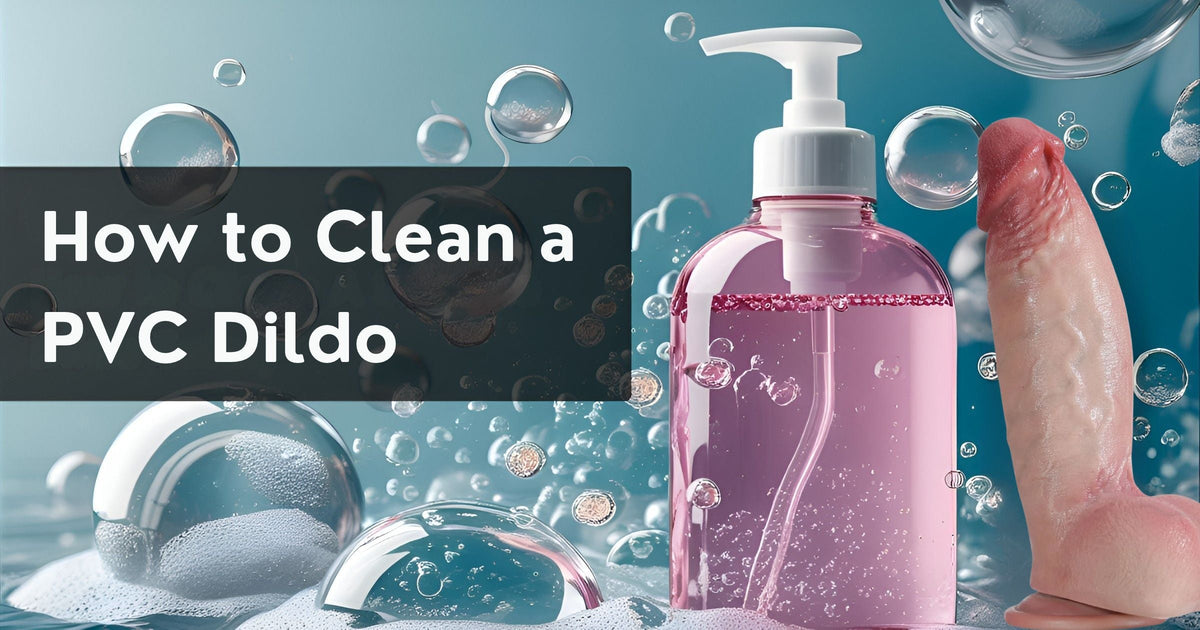
To clean a PVC dildo, wash it after every use with lukewarm water and a mild, unscented soap or a toy cleaner made for PVC, rinse it thoroughly, pat it dry with a lint-free towel and let it air dry completely before storing it alone in a breathable pouch. Never boil a PVC dildo, put it in the dishwasher, soak it in bleach or wipe it with alcohol, because heat and harsh chemicals can damage the material. Because PVC can be semi-porous, use a condom on it for easier hygiene and replace it when it becomes sticky, cloudy or smelly.
PVC dildos are common, affordable and often realistic-looking. But many owners care for them the same way they would a silicone toy, which can damage the material and make it less hygienic. PVC follows different rules.
This guide explains exactly how to look after your PVC dildo so it stays as clean and safe as possible. You will learn:
- Why PVC needs different care than silicone
- Which cleaning products are safe
- What damages PVC
- How to dry and store it
- When it is time to replace it
Why PVC Needs Different Care
PVC (polyvinyl chloride) is a plastic that becomes soft and flexible when manufacturers add plasticizers. That flexibility is what makes PVC dildos feel softer, but it also changes how they should be cleaned and stored.

PVC vs Silicone at a Glance
| Feature | PVC | Platinum silicone |
|---|---|---|
| Porosity | Often semi-porous, especially soft PVC | Non-porous |
| Can be boiled | No | Yes, if non-vibrating and care instructions allow |
| Dishwasher safe | No | Top rack, no detergent, if allowed |
| Heat tolerance | Low, can warp or soften | High |
| Silicone lube | Generally compatible | Not recommended |
| Oil-based lube | Avoid, can degrade the material | Avoid |
| Lifespan | Often months to a couple of years | Many years |
| Plasticizers | Often present, some PVC contains phthalates | None |
Why Heat Is a Problem
PVC softens at relatively low temperatures compared to silicone. Boiling water, dishwashers and hot water can warp the shape, make the surface sticky or speed up the breakdown of plasticizers.
Why Porosity Matters
Many soft PVC toys are semi-porous. Tiny surface pores can trap bacteria, lube residue and odors, especially as the toy ages. That means even careful cleaning may not fully sanitize a PVC toy.
What About Phthalates?
Some PVC toys contain phthalates, chemicals used to soften plastic. Many brands now label their PVC toys “phthalate-free.” If your toy does not say so, assume it might contain them, and consider using a condom over it.
How to Know If Your Dildo Is PVC
- The product listing says “PVC” or “vinyl”
- It feels firm but slightly flexible, often with a glossy surface
- It may have a faint plastic smell when new
- It is usually less expensive than silicone toys of similar size
If you are unsure, treat it with gentle PVC care to be safe.
Safe Cleaning Products
The safest products for PVC are gentle, fragrance-free and alcohol-free. Simple is better.

Safe Products
| Product | Why it works |
|---|---|
| Lukewarm water | Removes most residue without heat damage |
| Mild, unscented soap | Cleans without harsh chemicals |
| Toy cleaner labeled safe for PVC | Formulated for toy materials |
| Soft, lint-free cloth | Gentle on the surface |
Step-by-Step: How to Clean a PVC Dildo
- Clean right after use. Residue is easier to remove before it dries.
- Rinse with lukewarm water. Not hot.
- Apply a small amount of mild, unscented soap or toy cleaner.
- Gently wash the entire surface with your hands or a soft cloth, including veins, the head and the base.
- Rinse thoroughly until no soap remains.
- Pat dry with a lint-free towel.
- Air dry completely before storing.
Clean Before First Use
New PVC toys can have manufacturing residue or a light plastic smell. Wash before first use, and let the toy air out for a day if it has a noticeable odor.
Using Condoms on PVC Toys
Because PVC can be semi-porous, a condom adds an extra layer of hygiene:
- Makes cleanup easier
- Reduces direct contact with the material
- Essential if sharing the toy or switching between anal and vaginal use
Lube for PVC Toys
| Lube type | Use with PVC? |
|---|---|
| Water-based | Yes, safest choice |
| Silicone-based | Generally yes, check the manufacturer’s guidance |
| Oil-based | No, can degrade PVC and break down latex condoms |
Water-based lube, like our Water-Based Lube, is the safest all-around option and rinses away easily.
What Damages PVC
Many common cleaning habits that are fine for silicone can damage PVC.

Never Do This With PVC
| Avoid | What happens |
|---|---|
| Boiling | Warping, melting, sticky surface |
| Dishwasher | Heat and detergent damage |
| Hot tap water | Softens and weakens the material |
| Bleach | Breaks down the surface, can irritate tissue |
| Rubbing alcohol or hand sanitizer | Dries out and degrades PVC |
| Hydrogen peroxide | Can discolor and damage the surface |
| Harsh or scented soaps | Can leave residue and irritate skin |
| Abrasive scrubbers or brushes | Scratches that trap bacteria |
| Oil-based lubes or massage oils | Degrade the material |
| Direct sunlight or heat | Fading, sticky surface, cracking |
| Storing touching other toys | Material reactions and color transfer |
Why Alcohol Is Especially Harmful
Alcohol can pull plasticizers out of PVC, making the toy stiff, cracked or sticky over time. Avoid alcohol wipes and sanitizers entirely.
Signs You Have Damaged a PVC Toy
- Sticky or tacky surface
- Cloudy or dull appearance
- Cracks or tears
- Warped shape
- Strong or changed smell
If you notice these signs, it is time to replace the toy.
Drying and Storage
Proper drying and storage keep a PVC dildo cleaner and help it last longer.

Drying Steps
- Pat dry with a clean, lint-free towel.
- Air dry in a clean, ventilated area for at least 30 minutes.
- Check crevices, like around the head or base, for trapped moisture.
- Store only when completely dry.
Storage Rules for PVC
| Do | Do not |
|---|---|
| Store it alone in a breathable pouch | Let it touch other toys, especially silicone or other plastics |
| Keep it in a cool, dark place | Leave it in sunlight or near heaters |
| Store at room temperature | Leave it in a hot car |
| Keep it dry | Store it damp |
| Lay it flat or upright | Bend or squash it |
Why Separate Storage Matters
PVC can release plasticizers over time, which may react with other toys, especially silicone, causing discoloration or surface damage. Always store PVC toys in their own pouch. Browse our storage bags for options.
Avoid Plastic Bags
Sealed plastic bags can trap moisture and speed up material breakdown. Choose a breathable fabric pouch instead.
For broader storage and care tips across all toy materials, see our guide on how to clean sex toys properly.
When to Replace It
PVC dildos do not last as long as silicone. Knowing when to replace yours protects your health.
Replace Your PVC Dildo If You Notice
| Sign | Why it matters |
|---|---|
| Sticky, tacky or oily surface | The material is breaking down |
| Cloudy or discolored appearance | Surface damage that can trap bacteria |
| Cracks, tears or nicks | Hiding places for bacteria |
| Persistent odor after washing | Bacteria or material breakdown |
| Hardening or stiffness | Plasticizers leaching out |
| Warping | Heat damage |
| Irritation after use | Possible reaction or contamination |
How Long Does a PVC Dildo Last?
With careful use and storage, many PVC dildos last several months to a couple of years. Lifespan depends on the quality of the PVC, how often you use it and how well you care for it.
When to Consider Upgrading
If you use your toy often, want something that can be fully sanitized or simply want a more realistic feel, consider upgrading to platinum silicone. Silicone is non-porous, can be deep-cleaned and often lasts many years. Learn more in our guide to platinum silicone sex toys, and read about how long silicone dildos last.
| Feature | PVC dildo | Platinum silicone dildo |
|---|---|---|
| Upfront cost | Lower | Higher |
| Lifespan | Months to a couple of years | Many years |
| Can be sanitized | No | Yes |
| Realistic feel | Varies | Layered silicone feels much more lifelike |
| Cost per use over time | Can be higher due to replacement | Often lower |
Browse slim, body-safe silicone options in our Best for Beginners collection.
Disposing of an Old PVC Toy
Wrap the toy in a bag and dispose of it with household trash. PVC is not typically accepted in curbside recycling.
Care for It Right, Replace It When It’s Time
Learning how to clean a PVC dildo comes down to gentle care: lukewarm water, mild unscented soap, soft cloths, full drying and separate storage. Avoid heat, alcohol, bleach and oil-based products, use a condom for extra hygiene and replace the toy when it shows signs of wear. If you want a toy you can fully sanitize and keep for years, platinum silicone is the upgrade worth considering.
All RealCock Toys orders ship in plain, unmarked packaging with discreet billing, and orders over $99 ship free.